There are two questions available to you when something goes wrong, and most of us only ever reach for the first one.
Why is this happening?
It is not a bad question. It is often a necessary one. Understanding why something has happened is how you avoid repeating it, how you make sense of your own life, and sometimes how you grieve properly. I am not interested in the kind of optimism that skips this step. Pretending a hard thing is not hard is not optimism, it is avoidance wearing better clothes.
But I have noticed that the question has a habit. Once you sit down inside it, you tend to stay there. It is warm in there. It asks nothing of you.
So I have trained myself, imperfectly and with a lot of backsliding, to ask two more:
What can I learn from this?
What is possible from here?
From here
The second one carries the weight. From here is the part that does the work.
Not from where you wish you were standing. Not from the version of your life where the funding came through, or the family had more, or the country was different. From here. From this room, this month, this set of constraints, with these people, with whatever is actually in your hands.
For me, exploring possibilities means choosing action and optimism without ignoring reality. Both halves of that matter. There may be things we cannot control. There may be circumstances we never asked for. But there is almost always something we can do from our side, and the size of that something is usually not the point.
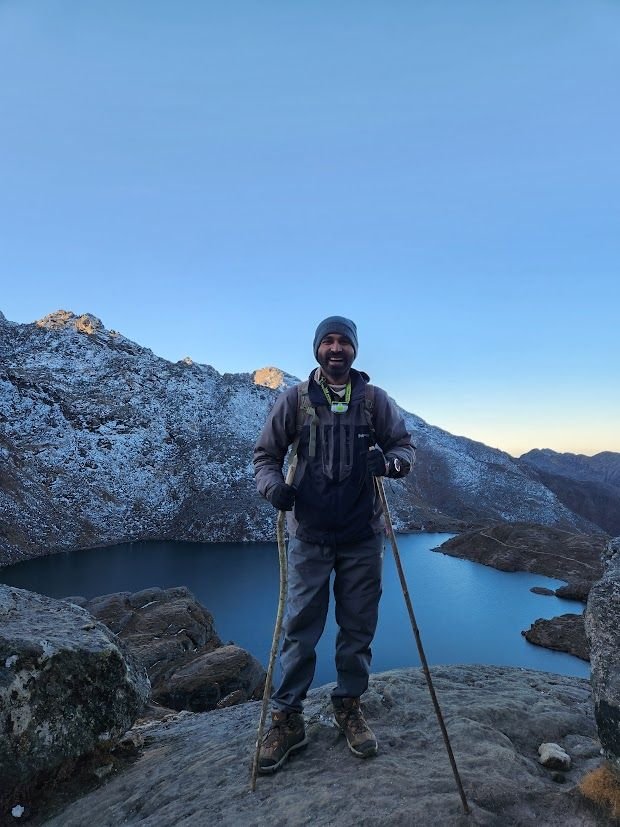
I grew up in a village in southern Nepal. A lot of the paths people describe as normal were not visible from where I was standing. What was visible was a series of small next steps, most of which I could not see the end of. I followed curiosity, listened to the signs around me, took a few risks, met extraordinary people, and tried to stay open to whatever appeared next.
I did not have a plan. I had a question.
Why I put it in front of other people
When I facilitate, I am not really teaching a framework. Design Thinking, entrepreneurial education, whatever we happen to call the thing that week, these are containers. What I am actually trying to do is get a group of people to stay in front of a problem for longer than is comfortable, until the question shifts on its own from why is this like this to what could it be.
You can see the moment it happens. The room changes posture. Somebody picks up a pen.
That shift is the entire job. Everything else is logistics.
I should say clearly that I have not resolved this for myself. I still sit inside the first question more often than I would like to admit. Some weeks I am very good at this and some weeks I am not good at it at all.
But I know which direction I am facing, and I know what to ask when I notice I have stopped walking.
What is possible from here?